
10 February 2026
Caring for stone fruit trees
Stone fruit trees can be productive additions to South Australian gardens, but they need regular care to produce well. Peaches, nectarines, plums and apricots all require attention to pruning, watering and feeding throughout the year. Here's what you need to know to keep your stone fruit trees healthy and productive.
What stone fruit trees need
South Australia's climate is well-suited to stone fruit growing. These trees prefer cold winters and warm, dry summers, conditions we reliably get here. This makes growing peaches, nectarines, plums, and apricots in your backyard more straightforward than in many other regions.
Getting pruning right
Timing matters when it comes to pruning stone fruit. The most important thing is to prune on a warm, dry day, ideally with some breeze. This helps the cuts dry out quickly and prevents bacterial infections and canker from developing.
For established stone-fruit trees, summer pruning is an effective method for controlling and managing tree size. Young trees are better suited to winter pruning, as this timing promotes the vigorous growth they need during development.
Different stone fruits need pruning at different times:
- Peaches and nectarines: Prune new growth lightly in summer, then complete the main prune in autumn
- Apricots and cherries: Prune in summer, after harvest.
- Plums: Prune in summer, once you've picked the fruit
The goal is to create an open, vase-like shape with four or five main branches spreading outward. This allows light and air to reach through the tree. One crucial point to remember is that peaches and nectarines produce fruit on the previous season's wood, so avoid cutting off all of last year's growth or you could lose your next harvest.
The new season's growth should be pruned back by a third to a half and thinned out if too congested. Peaches and nectarines need to be pruned every year to ensure consistent fruiting.
Apricots fruit on 3-4 year old wood and Plums fruit on 1-3 year old wood.
The summer prune should be a light prune, being careful not to expose the tree to sunburn.
Some trees may require further pruning in the winter to improve the tree structure.
Note that Apricot and Cherry trees should never be pruned in the winter.
Watering through the seasons
In Adelaide's climate, consistent watering is essential. When rainfall is low, give your trees a thorough soak once a week. Mulching around the base helps retain moisture in the soil.
Regular watering is particularly important during flowering and fruit development. Water stress during these periods can lead to fruit drop or poor quality harvests. Deep watering encourages roots to grow deeper rather than staying shallow, which helps trees cope better with hot summer conditions.
Feeding your trees
Stone fruit trees are heavy feeders. Once your tree starts producing fruit, fertilise three times annually in winter, spring and summer. Use a well-balanced organic fertiliser, specifically formulated for fruit trees, applying a good handful per square metre from the trunk to about a metre beyond the canopy edge.
At the end of winter, apply two handfuls of organic-based pelletised plant food around the root zone and water it in well. This provides the nutrients trees need for healthy growth and quality fruit production.
Share your surplus
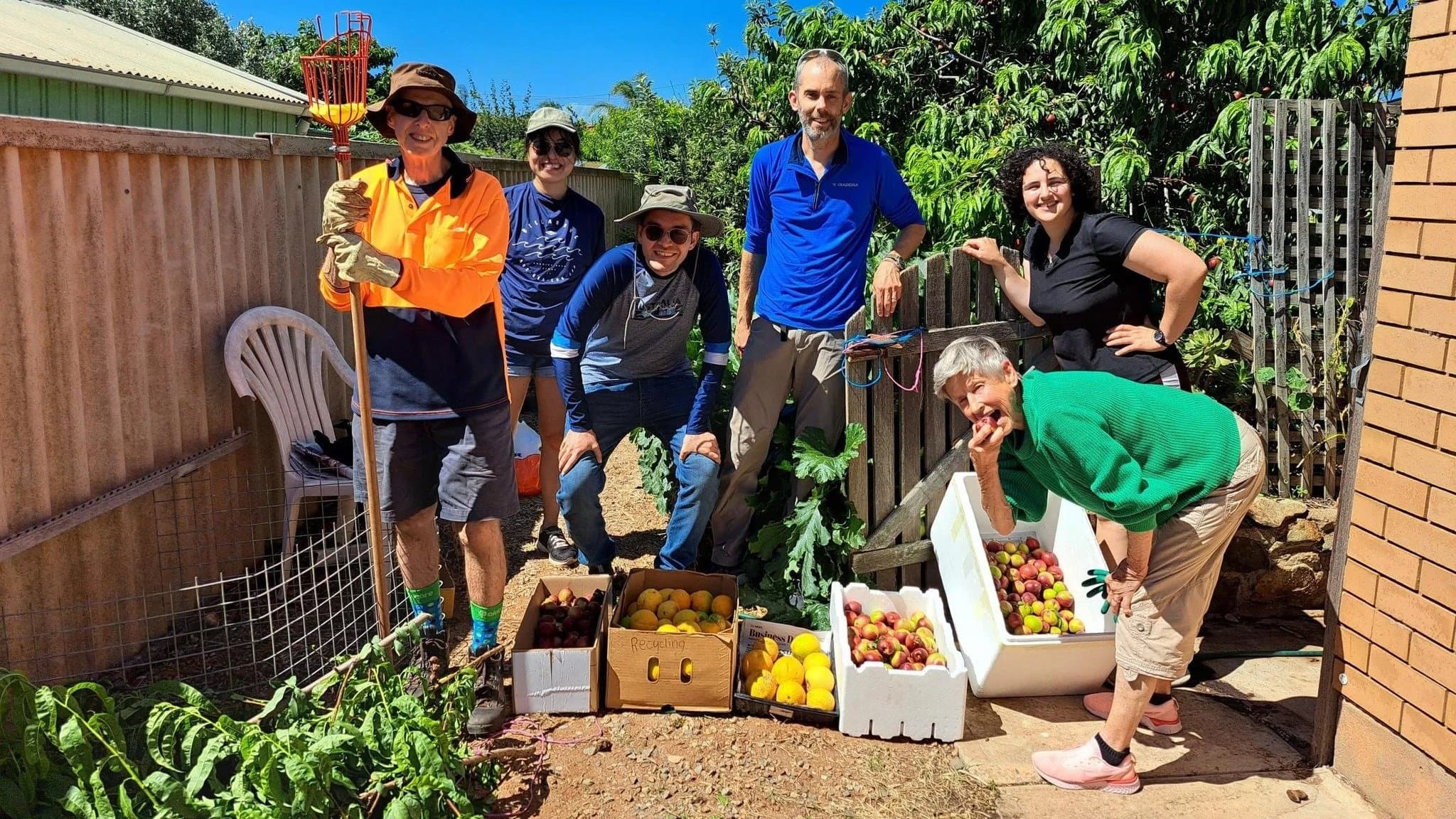
If you find yourself with more stone fruit than you can use, consider registering your tree with Fruit Share Adelaide. We connect tree owners with volunteers who harvest surplus fruit and distribute it to food relief organisations across Adelaide.
Proper care throughout the season means you'll have quality fruit ready to share with the community when harvest time arrives. Whether you're enjoying fresh fruit yourself or helping feed others, well-maintained stone fruit trees benefit everyone.